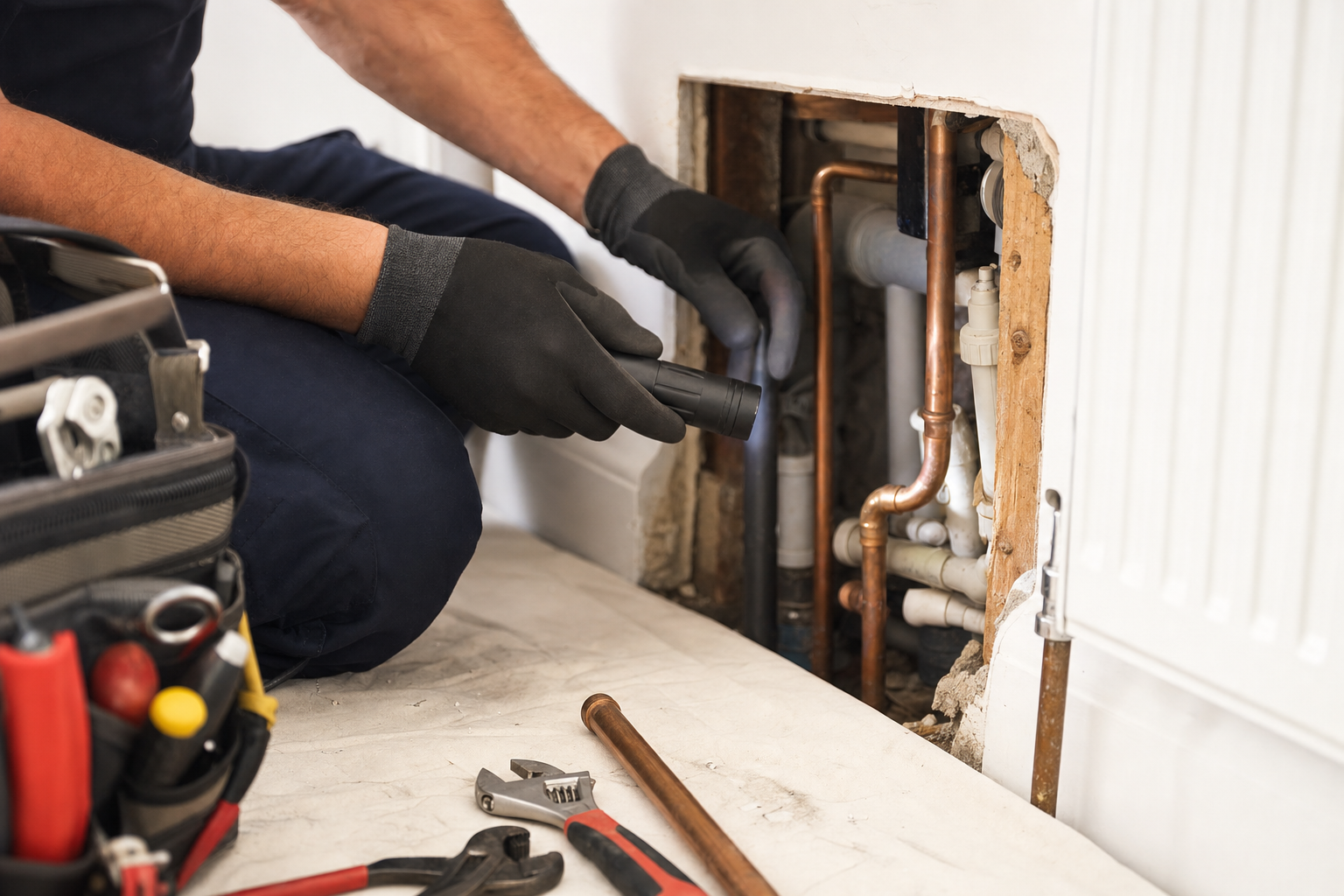
When you discover a water leak in your home, rental property or business, the priority is to limit damage, find the source and get the right repair carried out as quickly as possible. Jay Plumbing Heating & Drains helps customers in Twickenham with water leak investigations and repairs, including hidden leaks, burst pipes, leaking radiators and leaking waste pipes.
Water leaks can start small and become expensive fast. A faint drip behind a cupboard, a ceiling stain that seems to spread overnight, a drop in pressure or a damp patch near a radiator can all point to a developing problem. In older Twickenham homes, flats and mixed-use properties, leaks may travel through floors, walls and service voids before the visible signs appear. That is why a careful diagnosis matters as much as the repair itself.
If you need help with water leaks Twickenham, you can contact Jay Plumbing Heating & Drains on 020 3519 7480 or email info@plumbers-twickenham.co.uk. Current availability should be confirmed by phone or message before booking.
We support homeowners, landlords, tenants and property managers across Twickenham, including properties near Twickenham Stadium, Twickenham Station, York House Gardens, the River Thames and Eel Pie Island. The aim is to identify the cause, explain the options clearly and carry out a practical repair that fits the property and the fault.
Urgent signs you should not ignore:
- Water pooling under sinks, boilers, radiators or appliances
- Ceiling stains, bubbling paint or damp patches on walls
- Low water pressure or intermittent pressure loss
- Unexplained increase in water use or meter movement
- Dripping sounds with no obvious visible source
- Musty smells, mould growth or swollen skirting boards
- Water appearing near electrical fittings or light fixtures
If the leak is active, the safest first step is usually to isolate the water supply if you can do so safely, then protect nearby belongings and arrange for a plumber to inspect the issue. If water is close to electrics, avoid the area and switch off power at the consumer unit only if it is safe and you know which circuit is affected. If you are unsure, leave the area and seek urgent assistance.
For landlords and property managers, prompt leak handling helps reduce follow-on damage, tenant disruption and the risk of mould or structural deterioration. For tenants, reporting the problem early gives the best chance of a straightforward repair before the leak spreads to other rooms or neighbouring flats.
Leak Detections in Twickenham
Finding the source of a water leak is often the most important part of the job. A leak that shows up in one place may be caused by pipework elsewhere. For example, a stain on a ceiling may come from a bathroom above, a leaking waste pipe inside a boxed-in area, or a loose joint hidden behind tiles or panels. A pressure drop may indicate a small but continuous leak in heating pipework, a radiator valve, or a supply pipe under a floor.
Jay Plumbing Heating & Drains carries out leak detection with a practical, property-focused approach. That means starting with the visible symptoms, then checking the most likely routes the water could be taking. In Twickenham properties, common leak detection scenarios include:
- Leaks under kitchen units or behind appliances
- Bathroom leaks around baths, showers, toilets and basins
- Heating system leaks affecting radiators or pipework
- Ceiling leaks from above or from concealed pipe runs
- External or boundary leaks where water appears near walls or paths
Before a visit, it helps to note when the problem started, whether the leak changes when taps, heating or appliances are used, and where you first noticed damp or water movement. If you manage a rental or commercial property, it is also useful to tell the engineer which areas are accessible and whether any isolation valves are known.
Customers near Twickenham Station, around the town centre, or closer to the river often deal with a mix of older pipework and later alterations. In those properties, leaks may be hidden by previous repairs, boxed pipe runs or fitted furniture. A sensible inspection can save time by narrowing the fault before any invasive work is carried out.
Where possible, the first goal is to identify whether the leak is from clean water supply pipework, heating pipework, or waste pipework. That distinction affects the repair method, the urgency and the likely disruption. If the leak is active and the source is not obvious, isolate the supply if safe and avoid using fixtures that may worsen the problem until it has been checked.
Water Leak Repairs in Twickenham
Once the source of the leak has been identified, the repair can be planned properly. Water leak repairs may involve replacing a worn section of pipe, tightening or renewing a joint, repairing a valve, replacing a failed seal, or addressing damage caused by movement, corrosion or age.
In many homes, the repair is straightforward once the faulty part is exposed. In others, especially where the leak is concealed or has been present for some time, the surrounding materials may also need attention. That can include checking for damaged plasterboard, saturated insulation, softened chipboard, or staining that needs to dry out before redecorating.
Typical water leak repairs in Twickenham may include:
- Repairing or replacing leaking pipe joints
- Fixing cracked or split pipe sections
- Replacing failed isolation valves or stop taps
- Addressing leaks around bathroom fittings and seals
- Repairing leaks from supply lines to appliances
- Dealing with minor leaks before they become larger failures
For homeowners, a clear explanation of the fault and repair options is important, especially when the leak has affected decoration or flooring. For landlords, it is often helpful to have the issue assessed in a way that balances speed, access and the need to protect the condition of the property. For tenants, the main priority is usually stopping the leak, keeping the area safe and making sure the repair is properly reported.
Practical steps before the plumber arrives can make the visit more efficient. If it is safe to do so, move items away from the affected area, clear access to stop taps, boilers, under-sink cupboards or service panels, and take photos of the damage for your records. If the leak is from a ceiling or upper floor, place a container underneath only if it can be done safely and without putting anyone at risk.
After the repair, it is sensible to monitor the area for signs of residual moisture or a return of the leak. Some problems show up only when the system is under pressure or when a particular fixture is used. If the leak was concealed, drying time and follow-up checks may be needed before reinstatement work begins.
If you are dealing with a suspected leak near a boiler or heating controls, ask for current gas safety details before any gas work is carried out. Gas-related work should only be handled by appropriately authorised and competent professionals.
Burst Pipe Repairs in Twickenham
A burst pipe is one of the most urgent plumbing problems a property can face. Even a small split can release a large amount of water in a short time, leading to damage to floors, ceilings, walls, electrics and stored belongings. In colder weather, frozen pipework can also burst when it thaws. In older properties, pipework weakened by corrosion or movement may fail without much warning.
If you suspect a burst pipe, the first step is to stop the water flow if you can do so safely. Then turn off affected appliances or heating systems if needed and keep people away from wet electrical areas. If water is entering a neighbour’s property or a shared area, inform the relevant people as soon as possible so the situation can be managed quickly.
Burst pipe repairs often involve more than just replacing the damaged section. The plumber may also need to check why the failure happened, whether other parts of the pipework are at risk and whether the surrounding area has been affected by water ingress. In Twickenham, where homes can range from period terraces to modern flats, access and pipe routing can vary significantly, so the repair approach needs to suit the property.
Common burst pipe situations include:
- Frozen and split pipework in lofts, voids or external areas
- Corroded pipe sections that have finally failed
- Joint failure after movement or vibration
- Cracked pipework behind walls or under floors
- Leaks from ageing service pipes that worsen suddenly
For landlords and property managers, a burst pipe may require coordination with tenants, building management or neighbouring occupiers. Clear access instructions, isolation knowledge and prompt reporting all help reduce delays. For homeowners, the priority is to get the water isolated, the fault repaired and the area made safe before any redecoration or drying work begins.
After a burst pipe, it is important not to assume the problem is over once the water stops. Hidden moisture can remain in floor voids, cupboards or wall cavities. If there is staining, swelling or mould growth, the affected materials may need further drying or replacement. A careful inspection helps prevent the same area from failing again.
Leaking Radiator Repairs in Twickenham
Leaking radiators are a common source of water damage in homes with central heating. The leak may be obvious, with water dripping onto the floor, or it may be subtle, showing up as dampness around valves, rust at the bottom of the radiator, or a slow pressure drop on the heating system. Even a minor leak can cause damage over time and may reduce heating performance.
Radiator leaks often come from valve connections, bleed points, pinholes in the radiator body, or pipe joints at floor level. In some cases, the problem is not the radiator itself but the connections or associated pipework. That is why a proper inspection matters before parts are replaced.
Typical symptoms of a leaking radiator include:
- Water around the radiator feet or valve area
- Rust marks, flaking paint or corrosion
- Pressure loss on the heating system
- Air needing to be bled frequently
- Cold spots combined with signs of leakage
For customers in Twickenham, leaking radiator repairs should be handled quickly, especially in colder months when heating is needed daily. If the leak is small, it may still be enough to damage flooring or subfloor materials over time. If the radiator is in a room with wood floors, carpet or fitted furniture, protecting the area early can reduce the amount of follow-on damage.
Before the visit, it helps to note whether the leak changes when the heating is on or off, and whether the radiator has recently been bled, moved or adjusted. If the heating pressure has dropped, that information can also help narrow the fault. In some cases, the issue may be linked to wider central heating problems, so it may be sensible to check the rest of the system while the engineer is on site.
If a radiator is actively leaking, avoid continuing to use the heating system until the source has been checked, especially if the leak is near electrics or has already reached the floor below.
Leaking Waste Pipe Repairs in Twickenham
Waste pipe leaks can be awkward because the water is not always clean, and the source is not always obvious. A leaking waste pipe under a sink, bath, shower or basin may drip only when the fixture is used, so the damage can build up slowly before anyone notices. These leaks often create smells, staining and damp patches around cupboards, floors or ceilings below.
Waste pipe problems commonly involve loose joints, cracked pipe sections, failed seals, poor alignment or movement in the pipework. In bathrooms and kitchens, leaks may appear only after draining water from a sink, flushing a toilet or running a shower. That makes testing an important part of diagnosis.
Common signs of a leaking waste pipe include:
- Dampness under sinks or behind kitchen units
- Water marks around bath panels or shower trays
- Bad smells from trapped waste or leakage
- Stains on ceilings below bathrooms or kitchens
- Water appearing only when fixtures are used
In Twickenham properties, waste pipe leaks can be especially troublesome where pipework is boxed in or concealed behind fitted units. Access may need to be planned carefully so the fault can be checked without unnecessary disruption. For landlords, this is often one of the more common causes of repeated tenant complaints because the leak may seem minor at first but becomes more disruptive over time.
Where a waste pipe leak is found, the repair may involve renewing the affected section, improving the jointing, replacing a seal or correcting the pipe alignment so waste flows properly. If the leak has been ongoing, the surrounding cupboard base, wall finish or floor covering may also need drying or replacement.
Good preparation helps here too. If possible, clear the cupboard or area around the waste pipe, avoid using the fixture once the leak is known, and note whether the problem happens with one appliance or several. That information can save time during diagnosis and help the plumber focus on the right section of pipework.
For properties near Twickenham Stadium, Twickenham Station and the riverside areas, busy households and rental homes often need practical repairs that minimise disruption. Jay Plumbing Heating & Drains focuses on the plumbing fault itself, explains the likely cause in plain English and helps customers understand the next step before any work proceeds.
Why customers call us for water leak problems in Twickenham:
- Local area focus for Twickenham and nearby streets
- Clear advice on symptoms, access and preparation
- Service-specific support for leak detection and repair
- Proof of business presence available through the website and Google Business Profile
- Practical help for homeowners, landlords, tenants and property managers
If you need urgent help with a leak, call 020 3519 7480 now. If the issue is not an immediate emergency, you can email info@plumbers-twickenham.co.uk with a short description of the symptoms, your location in Twickenham and any access details. That helps the team understand the problem before the visit.
Whether the problem is a hidden leak, a burst pipe, a leaking radiator or a waste pipe fault, the best outcome usually comes from acting early. The sooner the leak is found and repaired, the more likely it is that you can avoid larger repairs, mould growth and repeated damage.
Jay Plumbing Heating & Drains is ready to help with water leak issues across Twickenham and nearby areas. Contact us when you notice the first signs of trouble, and we will help you work out the next practical step.
Call now: 020 3519 7480